Article
Schema markup for AI search: what works and what doesn't
Schema markup for AI search is oversold. Here is what Google and Bing have said, which schema types deserve a developer's time, and how to test whether it worked.
By Ranmi Sandalika · October 25, 2026

Schema markup for AI search is the most oversold tactic in the category right now. Vendors sell "AI schema" packages. Google's May 2026 guide to generative AI features says otherwise: structured data isn't required for AI Overviews or AI Mode, and no special schema.org markup exists for them.
That does not make schema worthless. Microsoft has said schema helps Bing's language models understand content, and the markup still earns rich results in classic search. So the useful question is narrower. What does it do, which types deserve a developer's time, and how do you check that it worked?
This guide answers all three. You get the evidence by engine, a priority list of schema types, a deployment checklist that accounts for AI crawlers, and a way to test results without fooling yourself.
What is schema markup for AI search?
Schema markup for AI search is structured data, usually JSON-LD, that labels facts already on your page: who published it, who wrote it, what you sell and what it costs. Engines parse those labels into records about your brand and content. No AI-specific version exists. Google and Bing read the same schema.org vocabulary.
Two layers matter here. First, crawlers parse your markup into the index and the entity records engines keep about companies, products and authors. Second, a language model reads the page text itself when it writes an answer. Schema helps the first layer directly. Its effect on the second layer is the open question, and most vendor claims fall apart there.
If AEO as a discipline is new to your team, our explainer on what answer engine optimization is covers the wider picture before you go further.
Does schema markup for AI search increase citations?
Not on its own, and no engine claims otherwise. Google says structured data isn't required for AI Overviews or AI Mode. Microsoft says schema helps its models understand content. Neither company lists markup as a citation factor. Treat it as low-cost groundwork.
What each engine has said on record
| Engine | What is on record | What it means for you |
|---|---|---|
| Google AI Overviews and AI Mode | May 2026 guide: structured data isn't required, no special schema.org markup exists, keep using it for rich results | Keep your current markup. Skip any "AI schema" package. |
| Bing and Copilot | Fabrice Canel of Bing said at SMX Munich in March 2025 that schema helps Microsoft's LLMs understand content | Worth doing if Bing or Copilot traffic matters to you. |
| ChatGPT and Perplexity | No public statement that citations use schema | Unknown, so never promise a client a result. |
Schema works best as one input in a wider citation plan. The other inputs are original data, clear page structure and mentions on third-party sites. That plan is the scope of our AEO and generative engine optimisation work. For the ChatGPT side, our guide on how to rank in ChatGPT search covers the other levers worth pulling.
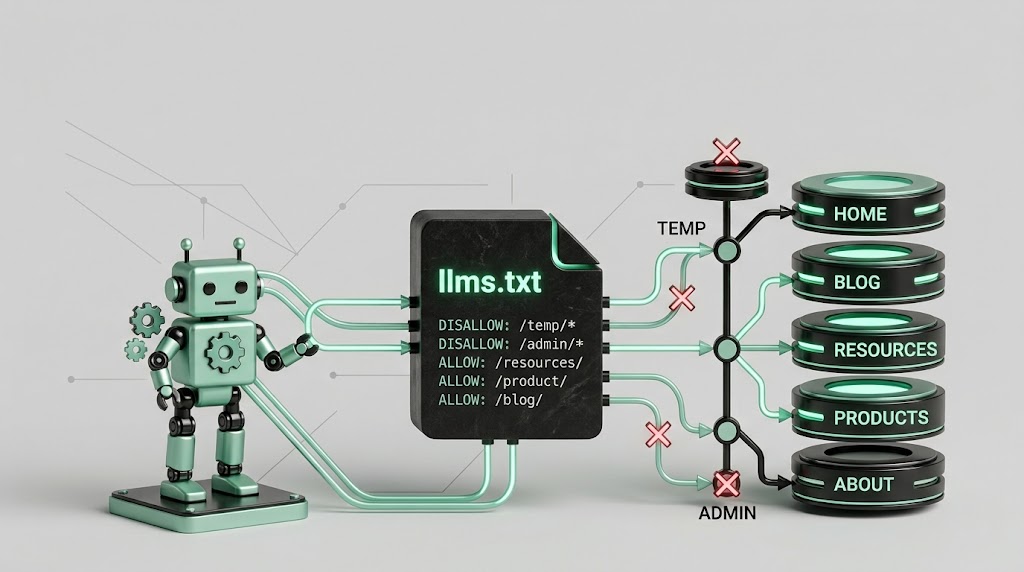
Google's guide also says you need no llms.txt file or other special machine-readable file for its AI features. We cover that in llms.txt for SEO.
What to pay for it
Price schema markup for AI search accordingly. Template-level markup takes a developer a few hours. A monthly retainer built around "AI schema" is hard to justify on current evidence. Controlled tests are scarce, so claims in either direction are mostly guesses. If a vendor cannot name which engine reads which property, ask what you are paying for.
Structured data for AI search: the four jobs it does
Structured data for AI search does four jobs. It identifies your organization as a distinct entity, labels authors and dates, keeps product facts consistent, and qualifies pages for rich results in classic search. Each job helps engines understand you. None guarantees a citation.
- Entity identification. Organization markup with sameAs links helps an engine decide that the company on your site and the one on your LinkedIn page are the same entity.
- Authorship and freshness. Person markup and the datePublished and dateModified fields give engines a byline and dates without guessing. Canel also told the SMX Munich audience that generative engines value fresh content, and he pointed to IndexNow for pushing updates to Bing.
- Commercial facts. Product and Offer markup carries price and availability in a form engines can compare across sources.
- Rich results. This job still earns clicks in classic search. Google cut back FAQ and HowTo rich results in 2023, so check which types still display before you plan around them. Rich results sit where our SEO services overlap with AEO, which is why we plan the two together.
For a fuller view of how the disciplines split the work, read our comparison of AEO vs SEO.
Which schema types to add first
Start with Organization, then Article and Person on every post, then BreadcrumbList. Add Product and Offer if you sell online, and LocalBusiness if customers visit you. Add FAQPage only when the questions and answers appear on the page. Skip anything sold as "AI schema," because no such type exists.
| Type | Add it when | Properties that matter |
|---|---|---|
| Organization | Every site, on the homepage | name, url, logo, sameAs |
| Article or BlogPosting | Every blog post | headline, author, datePublished, dateModified, image |
| Person | You publish named authors | name, jobTitle, sameAs |
| BreadcrumbList | Your site has category depth | each level's name and URL |
| Product and Offer | You sell online | price, priceCurrency, availability |
| LocalBusiness | Customers visit or you serve a set area | address, openingHours, telephone |
| FAQPage | Q&A is visible on the page | question and answer text matching the page |
Several vendor guides call FAQ schema a direct pathway to citations. We found no engine statement that backs that up. Add it when the Q&A helps readers, since it costs little, and keep the markup identical to the visible text. Quotable answers matter more than the tag around them. Our guide on how to get cited by AI chatbots covers how to write them.
Leave out HowTo, which lost its Google rich result. Leave out Speakable too, which Google documents as a beta feature for news content. Review markup also needs real reviews on the page, because anything else breaks Google's structured data policies.
Organization schema: the first markup to ship
Every other type points back to your Organization. If you ship only one piece of schema markup for AI search, ship this one. An Article names it as publisher. A Person names it as employer. If the Organization record is missing or inconsistent, those links have nothing to attach to.
Here is a minimal version:
json
The @id does the useful work. Your blog template can reference that same ID as the publisher of every post, so engines see one connected entity instead of dozens of loose fragments.
Keep four rules in mind. The name must match your visible brand and your LinkedIn page exactly. The logo URL must be crawlable. List sameAs profiles only if you control them. Output one Organization node per site, not one per template.
How to add JSON-LD to your site
Deploy schema markup for AI search as JSON-LD in a script tag, generated by your CMS template. Google recommends JSON-LD over other formats. Serve it in the server-rendered HTML so crawlers that skip JavaScript still see it. Then validate each template rather than each page, because one fix then covers every page built from it.
- Start with one template at a time. Do the homepage for Organization first, then the blog template.
- Render on the server. Googlebot runs JavaScript, but many AI crawlers read raw HTML only. Markup injected through a tag manager may never reach them.
- Mirror the visible page. Every value in the markup should appear on the page. Google's policies require this, and a mismatch gives engines a reason to distrust both.
- Automate dates. Change dateModified only when the content changes. Bumping it without real edits gives engines a reason to doubt your other dates.
- Ping on update. Push changed URLs to Bing through IndexNow, the API Canel recommended.
If your theme or page builder makes template-level JSON-LD awkward, that is a build problem. Fixing it belongs in a site rebuild, which is what our website development service covers. If a redesign is already on your calendar, add schema to the brief using our website redesign checklist.
How to test schema markup for AI search
Test schema markup for AI search in two stages. First, confirm the markup is valid and visible: run Google's Rich Results Test and the Schema Markup Validator, then view the raw page source. Second, measure outcomes by tracking a fixed set of queries for citations before and after the change.
Validation is the easy half. Measurement is where teams fool themselves, so run it like a small experiment.
- Build a query set. Pick 20 to 30 questions your buyers ask, the kind where you want your pages cited.
- Take a baseline. Check ChatGPT, Perplexity, Google AI Overviews and Copilot weekly for four weeks and log which pages get cited.
- Change one thing. Ship the markup alone. If you also rewrite copy that month, you cannot tell which change moved anything.
- Run each query several times. AI answers vary between runs, so treat small shifts as noise.
Expect an honest result that may be flat. A flat result still tells you the markup is working as groundwork, and it saves you from paying for more of it. Test the next change the same way, one at a time.
Five common mistakes with schema markup for AI search
- Markup for content nobody can see. If a price or rating exists only in the code, remove it or put it on the page.
- Duplicate Organization nodes. A theme and an SEO plugin often both output one, with slightly different names. View the page source and count them.
- Inflated review ratings. Fake or self-written ratings break Google's policies and put your rich results at risk.
- FAQPage on every page. Boilerplate Q&A repeated across the site adds nothing a reader wants.
- Making schema the whole project. Google's guide says useful, original content will likely shape AI visibility more than any other tactic it lists. Perfect markup on a thin page still leaves you with a thin page.
Where to start this month
You can finish the schema markup for AI search groundwork in three short steps. Week one is Organization markup with sameAs on the homepage, validated. Week two adds BlogPosting and Person to the blog template, referencing the Organization by @id. By week three, add Product or LocalBusiness if either fits, then start your baseline tracking.
Budget a few developer hours, not a retainer. If you want a second pair of eyes on your current markup, talk to the AiM Growth team and we will tell you which of these types your site is missing.
Frequently asked questions
Does schema markup help you get cited by AI search engines?
It helps engines understand your pages, but no engine says it earns citations. Google says structured data isn't required for AI Overviews or AI Mode. Microsoft says schema helps its models understand content. Add it as groundwork, and expect content quality and third-party mentions to matter more.
Which schema type should I add first for AI search?
Organization. Every other type, from Article to Person, points back to it. Put it on your homepage with your name, URL, logo and sameAs profile links, then reference it by @id from your blog template. Add Article and Person markup to your posts next.
Is FAQ schema worth adding for AI search?
Add it only when the questions and answers appear on the page. No engine has said FAQ markup earns citations, and Google cut back FAQ rich results in 2023. It costs little, so use it when the Q&A helps readers and the markup matches the visible text.
How can I check whether AI crawlers can see my schema?
View the raw page source, not the rendered page, and look for your JSON-LD script tag. Many AI crawlers read raw HTML without running JavaScript. If your markup appears only after scripts run or loads through a tag manager, move it into the server-rendered HTML.