Article
How to Rank in ChatGPT Search: A Practical Playbook
How to rank in ChatGPT search comes down to a different playbook than Google — one built on structure, verifiable facts, and mentions across the web that models can cross-check.
By Ranmi Sandalika · August 28, 2026

More of your buyers are researching inside ChatGPT before they open a browser tab. If you're only optimized for Google, you're invisible in that conversation. Learning how to rank in ChatGPT search is quickly becoming as important as ranking on page one.
Here's the catch. ChatGPT search doesn't work like Google. There's no ten-blue-links page to climb. Instead, the model pulls from sources it can verify fast, cross-check against others, and summarize with confidence. That changes what "optimization" actually means.
This is how the mechanism works, and what to change so you get cited instead of skipped.
How to rank in ChatGPT search: the mechanism behind citations
ChatGPT search blends its training knowledge with live web retrieval. When it answers a question, it pulls recent, relevant pages. It scans them for a direct answer. Then it decides which sources are trustworthy enough to cite.
That decision leans on a few signals:
- Clarity of the answer itself. Pages that state a direct answer early get pulled into summaries faster. Pages that bury the point under a long intro get skipped.
- Corroboration across sources. If three sites say the same thing, the model treats that as reliable. One lone claim, even a well-written one, carries less weight.
- Structured, scannable content. Headers, lists, and defined terms are easy to parse and extract. Dense paragraphs with the answer buried in the middle are not.
- Freshness and specificity. Vague, evergreen-sounding content loses out. Pages with specific numbers, dates, and named examples give the model evidence to point to.
This is the core of answer engine optimization. Write so a model can lift your answer cleanly, not just so a human can read it comfortably.
Structure your content so the model can extract it
Most sites lose their shot at ranking here purely on structure, not substance. Fix these first:
- Answer the question in the first two sentences. Don't build up to it. State the answer, then explain the reasoning after.
- Use a real H2 or H3 for the exact question you're targeting. Models weight headings heavily when matching a query to a page section.
- Define terms plainly the first time you use them. A short, clean definition is exactly the kind of chunk a model likes to quote back.
- Keep the supporting reasoning close to the answer. If the "why" sits three sections away from the "what," the model may grab the answer alone. That strips out the context that makes it accurate.
None of this requires new content. It just means reorganizing what you already have so the answer isn't buried.
Technical signals that help models find and trust your site
Structure gets you understood. Technical signals get you found and trusted in the first place. Getting these right is table stakes for how to rank in ChatGPT search at all — a few worth checking:
- Crawlability. If a page isn't indexed cleanly, it doesn't exist to a retrieval system either. Basic technical SEO hygiene still matters here.
- Schema markup. FAQ, Article, and Organization schema give models a structured, machine-readable version of your content. Without it, they're stuck inferring context from prose.
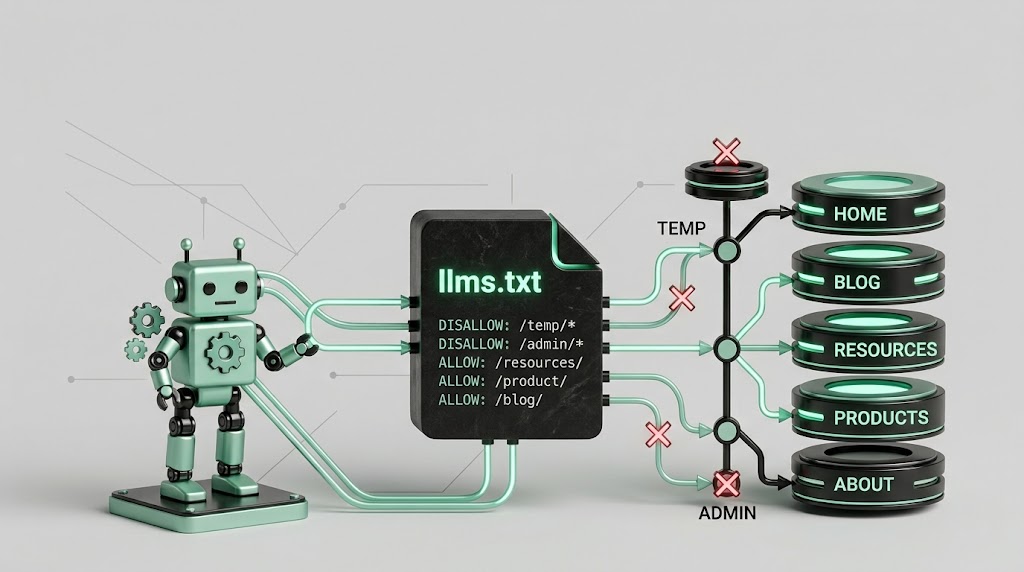
- An llms.txt file, if your platform supports it, gives AI crawlers a direct map of what your site covers.
- Page speed and mobile rendering. Slow or broken pages get deprioritized by the same crawlers that feed both traditional search and AI retrieval.
Build the AI search visibility that comes from being mentioned elsewhere
Here's the part most businesses skip. ChatGPT search doesn't only look at your site — it cross-checks what other sites say about you. AI search visibility, in other words, is partly built off-site:
- Digital PR and press mentions that get your brand named alongside the topics you want to be associated with.
- Being cited in comparison and roundup content on industry sites, not just ranking your own page.
- Consistent facts across your site, directories, and social profiles. Contradictory numbers or claims across platforms undermine the corroboration signal models rely on.
This is closer to traditional PR and digital authority-building than classic on-page SEO. That's why generative engine optimization is its own discipline, not a subset of SEO. It's also the core of our AEO and generative engine optimisation work: building the structured content and cross-web authority that gets picked up by generative engines, not just traditional search.
Common mistakes that keep businesses invisible in AI answers
A few patterns show up again and again. These are the sites that never get cited:
- Answer buried under a long preamble. If a reader has to scroll to find the point, so does the model.
- No structured data at all. Skipping schema means the model has to guess at context it could otherwise read directly.
- Inconsistent claims across the web. One number on your site, a different one on your Google Business Profile. That inconsistency reads as unreliable to a cross-checking system.
- Treating this as a one-time project. ChatGPT search re-crawls and re-evaluates constantly. A page optimized once and never revisited slips out of rotation as competitors update theirs.
Where to start
Start with your highest-intent pages — the ones already answering a specific question your buyers ask. Restructure those first: direct answer up top, clean headings, schema in place. Then build the off-site mentions that back up what your own pages claim.
Figuring out how to rank in ChatGPT search is a different skill set than traditional SEO. Most teams are still building it. If you want a second opinion on where your site stands, get in touch with AiM Growth. We'll walk through what's holding you back from generative search results.
Frequently asked questions
Is ranking in ChatGPT search the same as ranking on Google?
No. Google ranks pages in a results list. ChatGPT search selects and cites sources within a generated answer, favoring clear structure and cross-source agreement over traditional ranking factors.
How long does it take to rank in ChatGPT search?
There's no fixed timeline. ChatGPT search re-crawls and re-evaluates sources continuously, so structural changes can influence citations within weeks, while broader authority takes longer to build.
Does traditional SEO still matter for ranking in ChatGPT search?
Yes. Crawlability, page speed, and clean technical foundations still matter, since AI retrieval systems rely on the same infrastructure that traditional search engines use to find and index pages.
What is answer engine optimization?
Answer engine optimization is the practice of structuring content and building cross-web authority so AI systems like ChatGPT can extract, verify, and cite it directly in generated answers.