Article
Google Ads vs Facebook Ads: Which One Should Get Your Budget First
Google ads vs Facebook ads comes down to one question: is your buyer already searching, or do you need to convince them they have a problem? Here's how to split the budget by funnel stage instead of guessing.
By Ranmi Sandalika · August 28, 2026
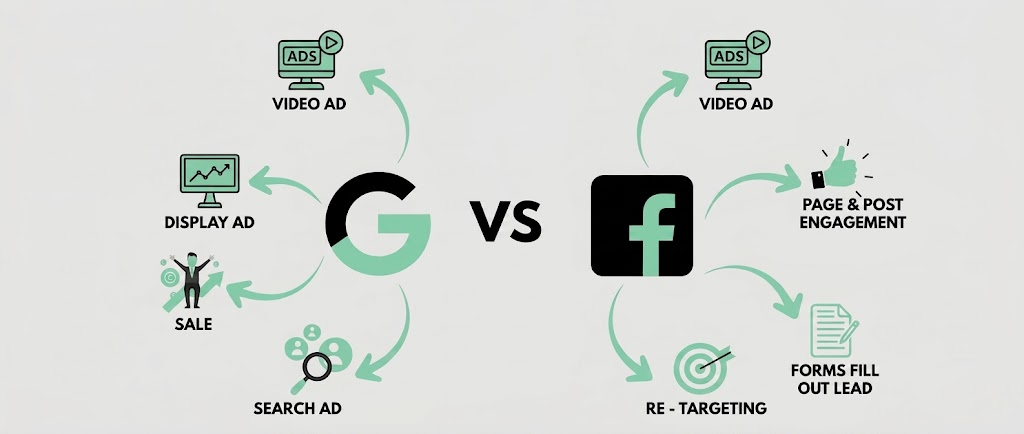
Google ads vs Facebook ads isn't a fair comparison. The two platforms sell you completely different things. Google sells you someone who already typed a problem into a search bar. Facebook sells you someone scrolling past a video of their cousin's dog. That person wasn't looking for anything until your ad interrupted them. Point budget at the wrong one and you'll pay for clicks that never had a reason to convert.
Google ads vs Facebook ads: what each platform actually sells you
Google Ads is a demand-capture channel. Someone searches "emergency plumber near me" or "best CRM for a 10-person sales team." You show up at the exact moment they're ready to act. You're not creating interest. You're catching interest that already exists.
Facebook Ads, and Instagram since both run through the same Meta ad account, is a demand-generation channel. Nobody searches for your product by name, because most people don't know it exists yet. The ad has to stop a scroll and make a case in three seconds. It does that without the built-in intent Google gives you for free.
A $500 lead comes easily from Google for a service with real search volume. That same $500 on Facebook might buy you 40 clicks and zero calls. Neither platform is broken. The google ads vs facebook ads question isn't about which one performs better in general. It's about which job you're hiring each one to do.
Google ads cost per click, and what it actually buys
Google ads cost per click ranges from under a dollar in low-competition niches to $50 or more in categories like legal services and insurance. That price isn't random. A single client in those categories is worth tens of thousands of dollars. It's an auction, and everyone bidding already knows what a customer is worth to them.
The number that matters more than CPC is cost per lead. A $15 click that converts at 8% costs you roughly $188 per lead. A $2 click that converts at 1% costs you $200 per lead. Same result, wildly different sticker price. Anyone judging a campaign on CPC alone is looking at the wrong column.
Facebook's cost per click usually sits lower, often $1 to $3 across most industries. But the clicks arrive earlier in the buying decision. A cheap click from someone who wasn't shopping yet still has to be educated and retargeted before it turns into revenue. Factor that cost in before comparing the two platforms on price alone.
Facebook ads targeting vs. Google's keyword targeting
Facebook ads targeting works by audience: interests, behaviors, and lookalikes built from your existing customer list. Meta's algorithm can also find buyers on its own using conversion data you feed it. You're describing a type of person and letting the platform find more of them.
Google's targeting works by query instead. You're not describing a person. You're describing the exact words someone types right before they buy. That's a narrower net, but a far more qualified one, because intent is baked into the search itself.
The practical difference shows up in creative. A Google search ad is mostly text that answers the query. A Facebook ad has to work as a piece of content first and an ad second, or the scroll continues. Teams that write Google copy and drop it straight into Facebook usually get the CPC to match: high, because nobody's stopping to read it.
Paid social vs paid search: splitting the budget by funnel stage
The paid social vs paid search question isn't either/or once you map it against how people actually buy. Cold audiences who've never heard of you sit at the top of the funnel, and that's Facebook's territory. Awareness, retargeting website visitors, and building the list Google can't reach, because those people haven't searched yet. Bottom-of-funnel demand belongs on Google, where the intent already exists: people actively comparing options or ready to buy this week.
A common split for businesses with a real sales cycle: Google gets the budget for high-intent, bottom-funnel keywords. Facebook gets a smaller, consistent spend for retargeting the people who visited the site but didn't convert. That retargeting layer often outperforms both platforms' cold campaigns, because you're spending on people who already raised a hand once.
Getting this split right is where most of our paid marketing and analytics work happens. It's not picking a platform once and leaving it. It's shifting spend monthly based on which stage of the funnel is starving for volume. A business with strong organic traffic but a weak retargeting pool needs Facebook more than more Google spend. A business with plenty of visitors but no bottom-funnel keyword coverage needs the opposite.
Google ads vs Facebook ads: picking a starting point if you can only run one
Run Google first if you have a product people already search for by name, category, or problem. That's true as long as you can afford to pay for proven intent while you build a list. Run Facebook first if you're introducing something new, or your audience doesn't know to search for it yet. It's also the right start if you already have a customer list worth building lookalikes from.
Most businesses past their first year of paid ads end up running both. Google works as the intent-capture engine, and Facebook feeds it through awareness and retargeting. Testing that split with real numbers, instead of a hunch, is the fastest way to find out which platform is underperforming. If you want a second set of eyes on where your budget is currently going, that's a conversation worth having with our team.
Frequently asked questions
Is Google Ads or Facebook Ads better for a small business with a limited budget?
It depends on whether people already search for what you sell. A local service business with real search volume usually gets a faster return from Google, because every click already carries intent. A new product without an existing search pattern often needs Facebook first, to build the awareness that makes Google searches happen later.
Can you run Google Ads and Facebook Ads at the same time?
Yes, and most established advertisers do. Google captures people ready to buy now. Facebook builds the audience that becomes tomorrow's Google searches. Running both also lets you retarget Google-driven website visitors on Facebook, which usually costs less than getting them to convert on the first click.
Why is my Facebook ads cost per click lower than Google, but I'm still not getting sales?
A low CPC on Facebook only means the click was cheap. It doesn't mean the person was ready to buy. Facebook interrupts people who weren't shopping, so the first click is often just the start of a relationship. Judge Facebook campaigns on cost per lead and cost per sale over a longer window, not on CPC alone.
How much budget do I need to test both platforms properly?
Enough to reach statistical significance in each channel. That usually means a minimum of 50 to 100 clicks per ad set before drawing conclusions. Splitting a tiny budget evenly across both platforms often means neither one gets enough data to judge fairly. Fund one platform properly first, then add the second once it's producing consistent numbers.